
Many people over the age of forty continue to exercise as if they were twenty. And while their enthusiasm is commendable, the body changes with age: muscles recover more slowly, joints become less flexible, and ligaments become more vulnerable. What used to help strengthen the body can now lead to injury or chronic pain.
If you notice that your usual exercises are causing discomfort, fatigue, or unpleasant sensations in your back and knees, it’s no coincidence. Your body is simply sending you a signal: ‘it’s time to rethink your approach.’
Why you should adapt your training after 40
After the age of 40, the body begins to function slightly differently. Metabolism slows down, collagen levels gradually decrease, joints lose mobility, and muscles lose their former elasticity. Any excessive strain, especially without proper recovery, can lead to inflammation, strains or microtraumas that previously went unnoticed but now make themselves felt for weeks.
At this age, the purpose of training changes. Now it is necessary for health and body stability. Instead of chasing results, it is worth focusing on functionality: developing flexibility, coordination, and strength that helps in everyday life. Technique and moderation become more important than the weight on the barbell or the number of repetitions. Exercises that put strong axial pressure on the spine or cause sudden jerks in the joints are best replaced with gentler, more controlled movements. There is a list of certain exercises that are dangerous for training and can harm your body after the age of 40.
1. Standing barbell press (military press)
Why is this dangerous? The standing military press puts a lot of strain on the shoulder joints and lower back. After the age of 40, the stabilising muscles no longer support the spine as effectively, so any deviation of the torso can cause pinching or inflammation. Try seated dumbbell presses with your back supported. This will reduce axial load and allow for better control of the movement. Use moderate weights and do not raise your elbows above shoulder level.
2. Deadlifts with heavy weights
Even a perfectly executed deadlift puts enormous pressure on the lower back. And if your back is slightly rounded, the risk of a hernia or muscle strain increases significantly. Choose Romanian deadlifts with dumbbells or bodyweight exercises for the back of the thighs. They provide the same strengthening effect without overloading the spine.
3. Box jumps
Jumping drills can enhance your ability to be fast and powerful, however, they are also very hard on the knees, Achilles tendons, and foot joints. Over time when the body loses its elasticity, it can become very easy to get a tear or inflammation from such movements. Make a change to walking lunges or step-ups from a low platform. They will make your legs and glutes stronger, but you will be safe from the injury.
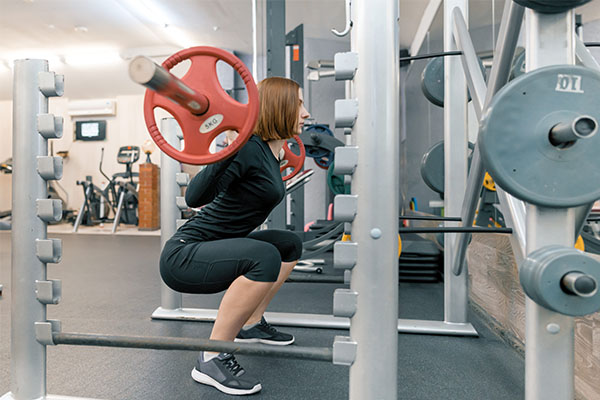
4. Squats with a barbell on your shoulders
Heavy squats put strain on your knees and lower back, especially if your technique is not perfect. After the age of 40, joint cartilage regenerates more slowly, and any excessive pressure can accelerate wear and tear. Use goblet squats with a kettlebell or dumbbell. They provide the same load on the legs but are safer for the spine.
5. Twists with legs fixed
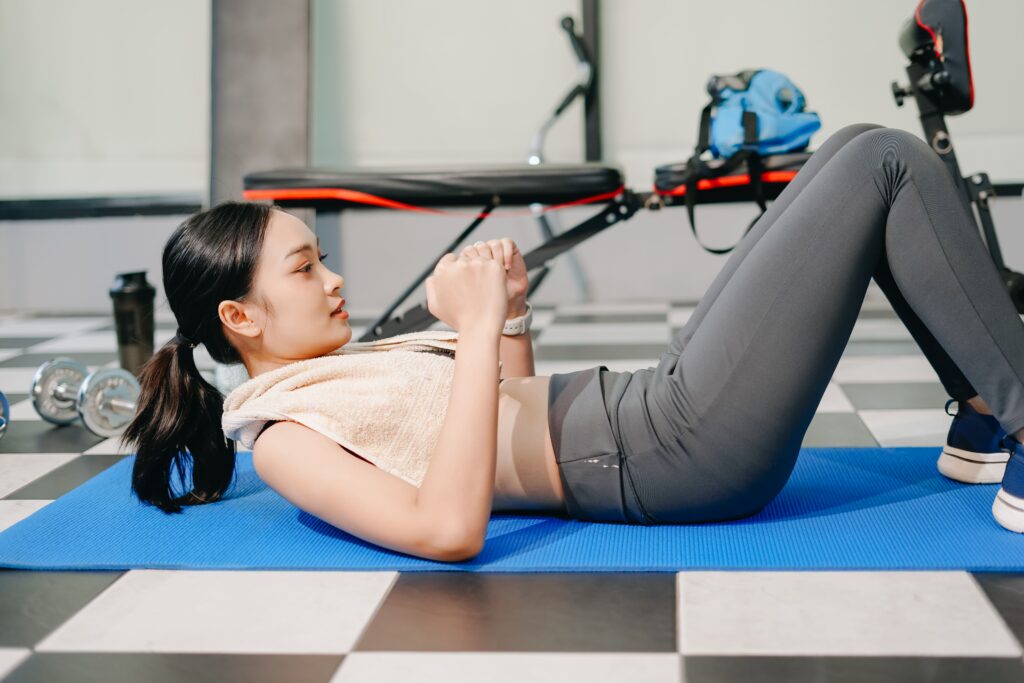
These twists strain the abs and the lower back. Fixed legs force the iliopsoas muscle to work, which often causes back pain. Choose the plank or dead bug. These exercises strengthen the core muscles without compressing the spine.
6. Long cardio workouts on the treadmill
An hour-long run may sound like a good way to ‘burn fat,’ but as we age, our joints lose their shock absorption. Constant impact on the knees and feet leads to chronic inflammation. Replace running with brisk walking on an incline, cycling, or using an elliptical trainer.
7. Leg raises while hanging
This exercise puts strain on the lower back and abdominal muscles, especially if the torso swings. After the age of 40, even a slight deviation in technique can cause pinching or stretching. Perform knee raises while lying down or use an ab roller with your knees on the floor. This will maintain effectiveness without risk to the lower back.
8. Burpees
Burpees are the king of functional exercises and one of the most injury-prone. They involve sharp jumps, push-ups and drops, which put enormous strain on the joints and cardiovascular system. Perform a modified version without jumps or do a dynamic plank. The main thing is to move smoothly and control your breathing.
A mature body – a mature approach
Physical activity after 40 is a way to prolong the youthfulness of your body. The main thing is to listen to your feelings and not try to prove to yourself that you ‘can still do what you used to.’ Joint health, flexibility, and spinal stability are much more important than heavy weights and the number of repetitions.
By replacing risky exercises with gentler alternatives, you can reduce the risk of injury and make your workouts comfortable, enjoyable and truly effective. Remember: it’s better to train sensibly than to recover from mistakes.
Comments are closed